
Lower back
Approaching lower back trouble from the root
Get a body that moves with ease
Asakusa, Tokyo · 6 min walk from Asakusa Station
Living with lower back pain — such as spinal canal stenosis — that never seems to go away?
Your lower back pain may be able to improve — even now!
Does this lower back pain sound familiar?
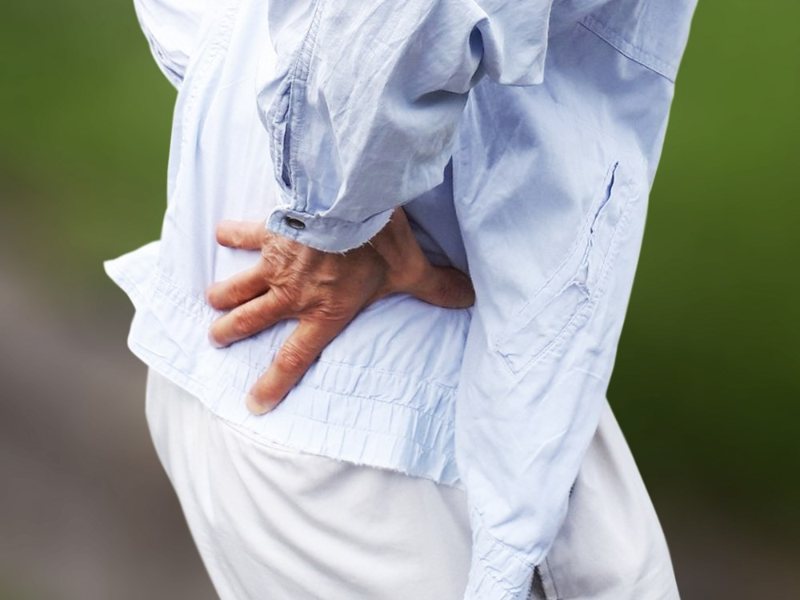
Are any of these troubling you?
- You’ve been treated in many places, but nothing improves
- The slightest movement brings on pain
- You regularly go to an orthopedic clinic for electrotherapy
- The pain is so bad you can’t enjoy sports or hobbies
You’ve tried hospitals and seitai, but…
- It seems to get better, then goes straight back to how it was
- Nothing changes, so you move as little as possible in daily life
- When you said nothing had changed, you were advised to have surgery
- You were told to rest until the pain goes away
Perhaps you have been through this. But you can relax now. If you have any of these troubles and truly want to improve your lower back pain, please leave it to us.
Iyashidokoro Shoryuken will be your last resort for lower back pain!
Why are we called the “last resort”?
What is spinal canal stenosis?
First, let’s briefly explain what spinal canal stenosis is.
In spinal canal stenosis, the spine becomes distorted, and the misaligned vertebrae (bones) press on the spinal canal. When the intervertebral discs deform, bulge out, and press on the canal, it is known as a herniated disc. The main difference is whether bone or disc tissue is putting pressure on the canal. At our clinic, we believe the underlying cause of both conditions stems from the abdomen.
Could the cause of lower back pain be in the abdomen?
We believe lower back pain occurs when blood flow around the lower back stagnates, causing the muscles to become cold and rigid. Why does blood flow stagnate? Because the intestines sag and press down on the muscles above the pelvis as well as the deep lower-back muscles inside the abdomen. Common causes of sagging intestines include work posture and the weight of accumulated stool.
We believe other approaches fail to provide relief because they cannot lift the internal organs. Because the physical load on the abdomen varies from left to right, the degree of muscle stiffness also differs. This creates uneven strain on the spine, causing it to become misaligned. As a result, conditions such as spinal canal stenosis and herniated discs can develop.
- The daily weight of food accumulates in the intestines, causing the internal organs to sink.
- These sagging organs press against the muscles around the pelvis (such as the psoas and iliacus).
- Blood flow around the lower back stagnates, the muscles harden, and forced movement triggers lower back pain.
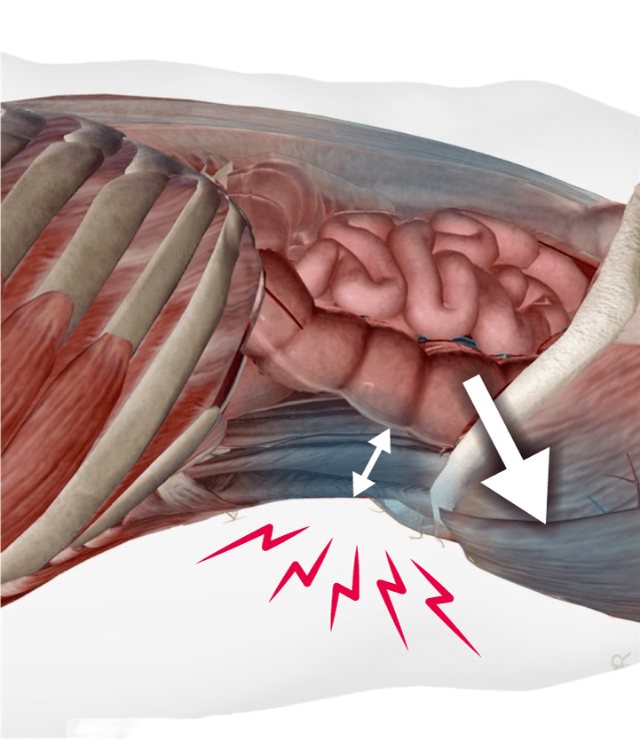
Stool accumulated in the intestines acts like a heavy weight. The intestines sag toward the pelvis, dropping down toward the lower back, and become stuck due to adhesions. The muscles surrounding these adhesion sites absorb the cold from the retained stool, causing them to become cold and rigid. With no gap left between the intestines and the muscles, blood flow completely stagnates.
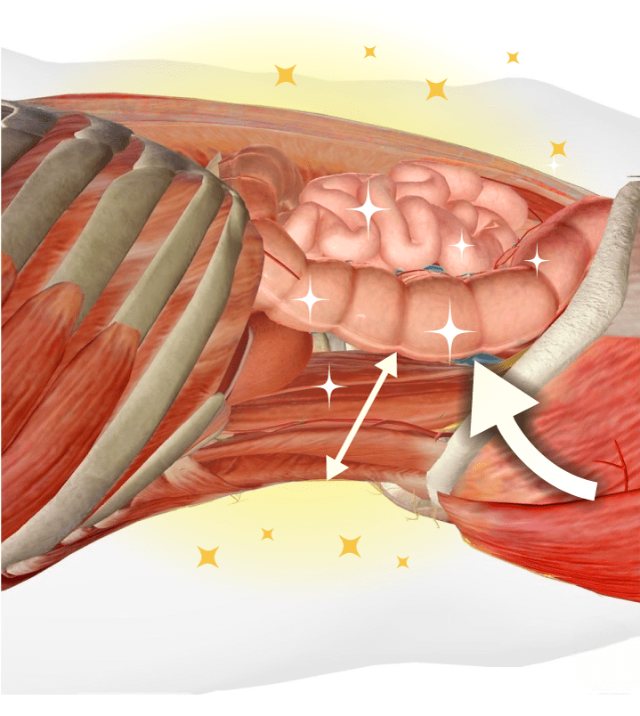
The adhesions between the intestines and the lower-back muscles are released. The intestines are lifted from the back toward the navel, securing a clear gap between the intestines and the muscles of the lower back to restore proper blood flow. As a result, the muscles are able to relax.
An original approach that reaches deep into the body
We place great importance on using our original technique to reach deep into the body. For spinal canal stenosis and disc herniation, we must relieve the load on the muscles near the spine that cause the distortion. The sagging intestines responsible for this load are stuck to the muscles inside the abdomen due to adhesions.
Our technique carefully releases these adhesions and lifts the internal organs back to their proper position. As a result, blood flow between the intestines and the muscles is restored. With this recovery in circulation, the muscles warm up and the restrictions caused by adhesions disappear, allowing symptoms to improve. Many clients even feel a sense of warmth throughout their body during the session.
Because the sagging organs are lifted and the muscles can function without restriction, the position of the pelvis is also naturally aligned.
You no longer need to worry alone. If you are dealing with these troubles and want to resolve your lower back pain, leave it to us.
Only here: our original technique
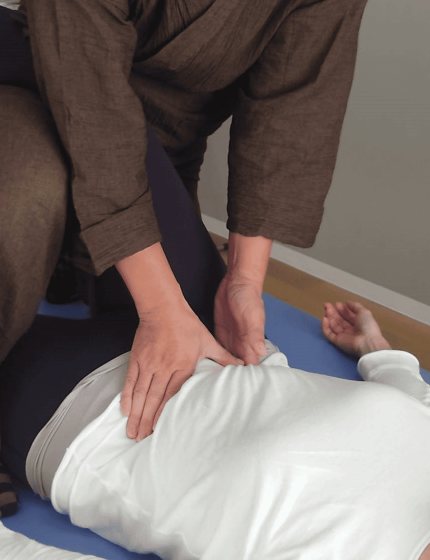
“Rasen Zero” is unlike any other kind of bodywork. It relies on a unique way of using the body, with one defining hallmark: no pressing, no kneading, and no forcing. This allows us to adjust deep parts of the body that conventional approaches often cannot reach. If you want to recover as quickly as possible, or if you are dealing with severe symptoms that have been slow to change, please experience it for yourself just once.
About Rasen ZeroGuest voices
See what guests with similar troubles have to say
Headlines of guest reviews, translated from Japanese. Individual experiences vary.
The explanations on this page describe how Iyashidokoro Shoryuken understands and approaches physical trouble. They are not a medical diagnosis, and seitai is not medical treatment. Results vary from person to person. If you have severe or worsening symptoms, numbness, weakness or a diagnosed condition, please consult a doctor first.